My $20 Subscription is a Personal Software Factory
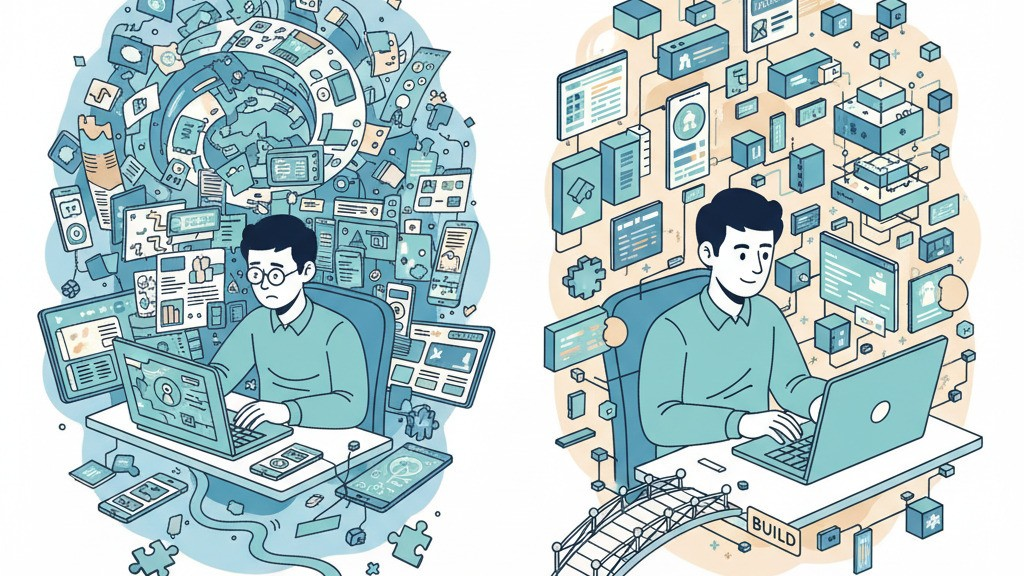
In economics, a factory is a location where raw materials are processed into value. My $20 monthly AI subscription isn’t a bill; it’s a personal software factory.
Last weekend, I faced a backlog of 36 weekly podcasts—roughly 54 hours of audio I didn’t have time to listen to. In 2019, solving this would have meant hiring a developer for two weeks or buying a $49/month SaaS subscription that would inevitably fail on edge cases.
Instead, I built this website in 48 hours for $0 in marginal cost.
The Death of the “Tactic Moat”
Five years ago, a project like this required “technical leverage.” You needed to know APIs, databases, and front-end state management. Today, those are just smart Lego blocks.
I stopped asking, “What app can solve this?” and started asking, “How can I build exactly what I need with the tools I already pay for?”
The technical moat is gone. If I can build a podcast digest engine in a weekend, so can everyone reading this. The only advantage left is Founder-Product Fit—an obsessive, lived connection to the problem that makes you tweak the “hallucination cleanup” logic until it’s perfect for your specific ears.
The Paradox of the Software Factory
AI has removed the barrier to entry that once protected small software businesses. This simplifies every decision but creates a brutal operational reality:
- Empowerment: I am now an active architect of my own digital tools.
- Commoditization: Anything I can build in a weekend can be replicated by a competitor by Tuesday.
This means building “features” is no longer a strategy. The value has shifted from the ability to build to the story and deep understanding of what is being built.
What I Learned (Including Uncertainty)
Building this factory made me realize that I’m often my own worst user. I spent 4 hours tweaking a UI element that I didn’t actually need to process the 36 podcasts. I fell for the “feature trap” in my own personal tool.
What I’m still figuring out:
- Is “unlimited custom software” just another form of digital clutter?
- At what point does the maintenance of my “personal factory” exceed the time saved by the tools?
Key takeaway: Don’t wait for a commercial product built for an “average” user. Build the boring, unsexy tool you wish you always had.
Your takeaway: Use this analysis of how I process audio to see if you can build your own ingest engine this weekend.
What I learned from documenting this: Reflecting on this weekend project helped me spot a flaw in my logic: I was optimizing for consumption (listening to more podcasts) when I should have been optimizing for clarity (listening to fewer, better things). Documentation is the only way I catch myself running in circles.